BDH joins NHS roundtable discussion with UoB, Government and NHS providers
Last updated: 09/06/2026
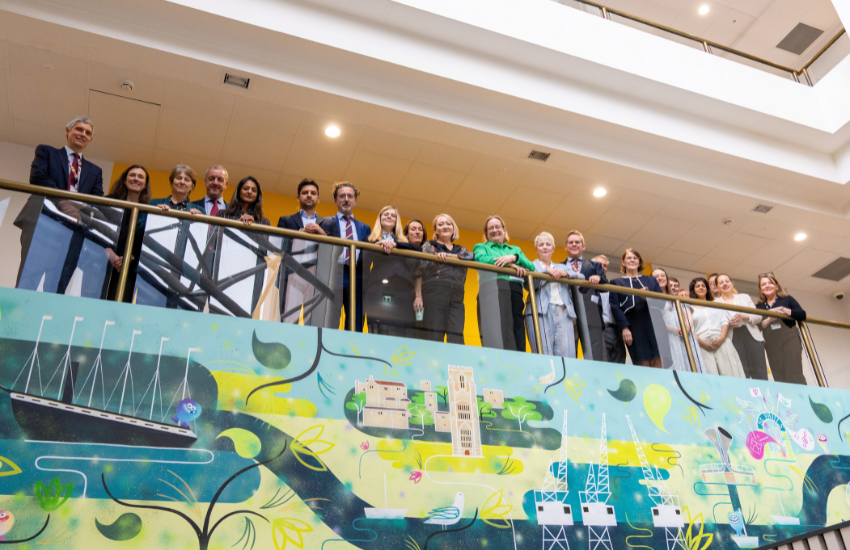
Chief Medical and Innovation Officer Professor Tim Whittlestone joined politicians, NHS leaders and University leaders to explore opportunities to address oral health inequalities through innovation and partnership.
The event was co-hosted by Bristol East MP Kerry McCarthy (who represents people living near the dental school), and included Karin Smith, Minister of State (Department of Health and Social Care) as well as representatives from NHS England, local government and the University of Bristol.
During the discussion which centred around partnerships and collaboration, attendees agreed that institutions in the city have to work together and discussed a ‘one city’ approach with everyone in the room pledging their service to local people in Bristol and the surrounding areas.
Overarching themes that came out of the discussion was an ambition to get other cities to emulate how Bristol is leading the way in this area, how to keep dental graduates to stay and practice locally, working directly with neighbourhoods in the city, and how to improve access to services and education to prevent instances of so-called ‘DIY dentistry’.
There was also a focus on wider lifestyle factors that influence poor dental outcomes including how to reduce sugar intake in schools, setting healthier habits a lot earlier and different ways to get the message out to young people on the importance of dental care – this included using footballers and other high profile partners to talk to young people about sugar intake rather than dentists.
Professor Tim Whittlestone, Bristol NHS Group Chief Medical and Innovation Officer, said: “As the regional centre of excellence for secondary and tertiary clinical dental services, Bristol Dental Hospital supports patients who require complex treatment and emergency dental care. We recognise the challenges and impact that access to oral healthcare can have for people in the South West, particularly those in underserved communities.
Working with Bristol Dental School and health, academic and political partners is key to understanding the challenges in the South West and beyond so that we can seize opportunities to develop greater patient access, offer fulfilling career pathways for NHS workforce and utilise innovations and new technologies to offer the best possible care to all the communities we serve.”
Karin Smyth MP for Bristol South and Minister of State (Department of Health and Social Care) said: “What’s really interesting about what Bristol is doing is the partnership working – working with the city, the NHS and the University both to recruit dental students and to make sure there’s good care here in the city. It’s a really interesting model and I’ve heard that we’re taking it to other parts of the country which is great. As a Government widening participation and getting young people though their career and into these fantastic opportunities is a really critical part of what we want to do. What they’ve done here in Bristol is to take this building and transform it into something which is a fantastic place to deliver care. There’s a willingness, and a recognition, by all the institutions here today that they are better together. Local dentists and GPs, the NHS, the Universities, the Russell Group and the FE sector, all have the same interests at heart to deliver good care. I think working together is crucial and we want to see this replicated across the country.”
Kerry McCarthy, MP for Bristol East, added: “Bristol Dental School is the ideal combination of the university training up the future workforce, but also meeting that community need for people that urgently need treatment. Bristol has always led the way in terms of the ‘one city’ approach, and this is a vindication of that. It’s a joint effort and that means reaching out to people who live in the community and young people who might have careers in this field. It means seeing where the dental need is and fulfilling that need and it’s also about the University doing an absolutely great job in terms of investing in an incredible facility like this and getting students to apply.”
Professor Evelyn Welch, Vice-Chancellor and President of the University of Bristol, said: “In 2023, we transitioned from a hospital to community environment, opening our £36 million new dental school - the most significant capital investment in dental education in the UK in the past decade. Our University is a key partner to our host city and the people living in it. As such, improving the lives of Bristolians and people living in the South West is key to our strategy and we constantly seek to collaborate with city, regional and national leaders to ensure we do this. Our new operating model means that the University of Bristol directly delivers patient care to our local community, with the flexibility to work with the communities who need access to dental services the most.”
Professor Barry Main, Head of School – Bristol Dental School, added: “We are very proud of what we have already achieved but there is significant scope for university dental schools, like Bristol, to further apply their expertise in education and training to rethink how early postgraduate dental training and education is delivered. In short, there is now an opportunity to allow better access to care for patients and attractive career development opportunities that retain dental professionals in the NHS.”
The event was organised by the Russell Group through its Healthier Communities 2030 commitment, for which 24 research-intensive universities, including Bristol, have pledged to strengthen the NHS and public health system by expanding training, widening access to health careers, and accelerating innovation through partnership.
The World Health Organisation describes oral diseases as a major global public health issue:
- In the South West, the 2018 Adults in Practice survey revealed worse outcomes than the England average: 31.5% of adults had active tooth decay (versus 26.8% nationally), and 69.2% experienced gum bleeding (versus 52.9% nationally).
- In Bristol, although the dentist-to-population ratio is better than the national average, adult NHS dental appointments fell between 2021 and 2023 compared with 2019/20.
Bristol City Council’s 2024 Oral Health Needs Assessment found that nearly half of children did not attend NHS dental services between 2021 and 2022, while more than a quarter of five-year-olds have tooth decay.
- Tooth extraction rates for children aged 5–9 are almost 50% higher than the national average — equivalent to 17 full classes of children attending hospital for extractions in a single year. Locally, around 18,000 school days are lost annually to dental problems, with a similar level of parental work absence.