Biomedical Science Day 2024
Last updated: 06/06/2024
Biomedical scientists and laboratory staff help diagnostic services analyse over 1.5 billion samples in the UK every year, identifying diseases and providing reports highlighting the effectiveness of potential treatments. In the UK, diagnostic activity forms part of over 85% of clinical pathways.
At UHBW the biomedical science workforce includes biomedical scientists, clinical scientists, pathologists, nurses and healthcare science support staff. Working as a team they provide diagnostic testing and monitoring on a variety of specimen types to support clinical teams in diagnosing, treating and supporting patients with different conditions.
Meet some of our #TeamUHBW biomedical scientists below.
Want to know more about a career in biomedical science? Take a look at the NHS website.
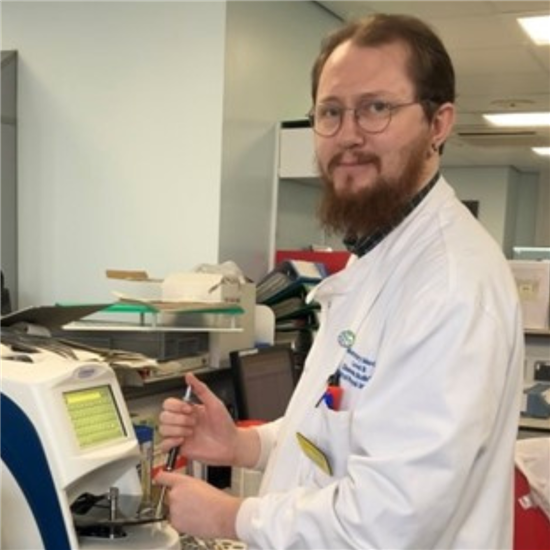
Jacob Ibbotson, Associate Practitioner (AP) - Bristol Royal Infirmary
“If you’re looking for a lab-based role that has a lot of variety and hands-on experience, I would strongly recommend considering becoming an Associate Practitioner!
“I have been an AP for a year now, and the role has really advanced my understanding of the scientific principles behind the clinical tests we perform and the ways in which our analysers operate. It has provided me with all the lab-based skills and experience of a Laboratory Assistant, as well as learning more complex procedures such as performing maintenance and Quality Controls (QC) on our analysers; I also prepare samples and slides for specialist testing. My favourite part about being an AP is its versatility. I get rotated through the different sections within our laboratory and it has really helped expand my knowledge and understanding in the disciplines of Haematology, Biochemistry, Coagulation and Transfusion.
“An additional benefit of working for the Bristol Royal Infirmary is that it offers a wide range of apprenticeships for laboratory staff, which are paid for by the trust. I am currently working towards a Level 3 Laboratory Technician Apprenticeship Standard, and I’m allocated one day a week for studying. I also sometimes get to travel to other locations to perform practical experiments with my classmates. The apprenticeship scheme is brilliant because it gives me the ability study without having to find time outside of my working hours or funds from my own pocket to improve my academic qualifications!
“Whether you’re aspiring to become a Biomedical Scientist or looking for a career advancement path within a clinical laboratory, working as an AP is great for getting hands-on experience and furthering your professional development. If you like the idea of working in a lab but also enjoy being able to have variety in your day-to-day work and continually learning new things, then the Associate Practitioner role would be perfect for you!”
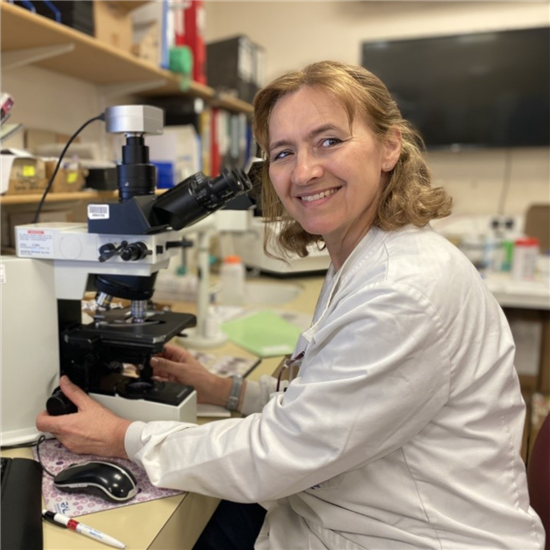
Kirsten King, Biomedical Scientist -Weston General Hospital
“My role involves operating complex equipment, checking results, requesting further tests if required and viewing blood films under a microscope.
“Algorithms are set to automatically release normal results, but I have to decide if abnormal ones are the result of a problem with the sample itself (perhaps it has clotted before analysis), a fault, or the patient may have a condition that requires further testing or needs urgent referral for treatment.
“An important part of further testing involves physically looking at blood films. I really enjoy this part of the work - it seems somehow very real when you see the actual blood cells, and I feel connected to the patients in my care.
“I started my training quite a long time ago when a lot of testing was manual - some tests felt more like a craft than a science! It has been fascinating to see how the profession has progressed, with advances in computing and automation, testing capabilities, and our understanding of disease.”
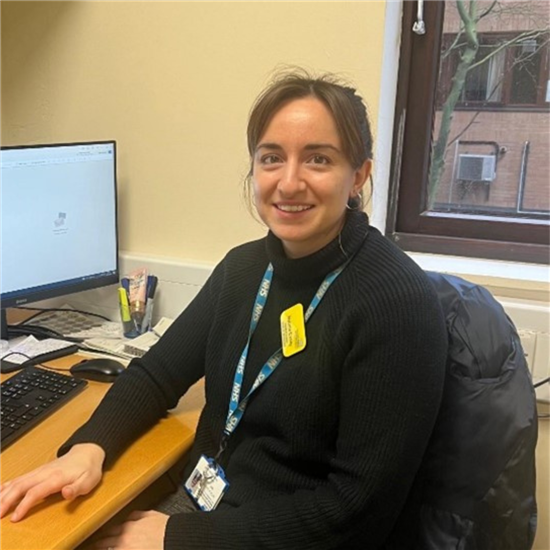
Natalia Casey, Quality Manager, Laboratory Medicine - UHBW
“I am a Quality Manager across Laboratory Medicine, having started my career as a Biomedical Scientist in microbiology. I now work across both hospital sites and across all of our specialist disciplines making my job extremely varied.
“The role of a Quality Manager is to provide support and expert advice to our laboratories to enable them to become compliant with standards relating to their area. For example, many of our services are accredited to ISO 15189, meaning we have assessors visit once a year to audit our services and provide an external review of how high quality our services are. To enable this, I spent a lot of time, scheduling meetings, performing internal reviews, and alongside our Quality Officers, supporting with document and incident management.
“It’s incredibly rewarding to have successful assessments and share this achievement with the disciplines you have been working with. This is whilst always having a creative mind about finding solutions for any difficulties departments may have in relation to quality and creating opportunities to continuously push and develop our services for even greater improvement and care for our patients.”
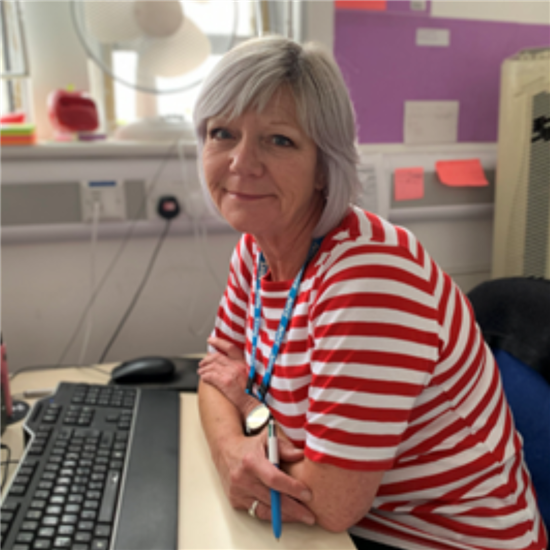
Soo Cooke, Transfusion Practitioner Nurse - Bristol Royal Infirmary
“Transfusion is a highly regulated field to ensure patient safety. The role of the Transfusion Practitioner involves interacting with many different healthcare professionals but not necessarily in any one clinical area. Primarily my role is to promote Haemovigilance; The safe and appropriate use of blood and blood components. This can range from monitoring the appropriate use of blood components, investigating transfusion related incidents, education and training clinical staff in safe transfusion practice, monitoring competency compliance, undertaking local and national audits, supporting patients through the transfusion process, and optimising patients who prefer not to be transfused.
“A nurse by profession, my role also helps to provide a link between the transfusion laboratory and the clinical areas. Each day can be very different and often full of surprises.”